srijeda, 11. veljače 2015.

Miss Havisham; Research + Face Charts

I am still exploring and researching and trying to decide between 2 ideas. One being the older Miss Havisham in Pips eyes when he first met her, and the other being young Miss Havisham on her or her wedding day, when she was about 20 years old.. 

Miss Havisham on her wedding day

I would like to capture the way she looked just after she read the hearbreaking letter, in the moment when her world turned upside down. That is why I have been researching at looking more into Victorian weddings, expecially Queen Victoria's, as it was the biggest wedding of the 19th century. Miss Havisham did not have a dream wedding a happily ever after. In fact, it was far from that. Never the less, like for any other bride, it was a life changing day for her, just not in the way she hoped it to be. At 8:35 she was ful of life; happy, cheerful, trying to look her best for her husband to be. The house was decorated, the breakfast table was set. Five minutes later, at 8:40, it was all gone; the happiness and the sparkle in her eyes. Something inside of her had died, and from that moment on, she fell into this huge hole of her own depression and sadness and never found a way out.

Victorian Portraits - research

Before I started creating the face charts I started the research. I looked at Queen Victoria's images, but also portraits of other victorian upper class women, as Miss Havisham was one of them, too. I mostly focused on finding portraits taken on their wedding days, as there I could see the most accurate Victorian bridal make up looks, and then I tried to recreate them in my face charts. Paintings by a german painter and lithographer,Franz Xaver Winterhalter (1805-1873), really caught my eye.

Here are some of the images that I took my inspiration from...
Portrait of an Early Victorian Woman
Portrait of an early victorian woman on her wedding day; Thought to be a member of the Pardoe family
unknown artist
(early 19th century)
Nantgarw China Works Museum
(source: http://www.bbc.co.uk/arts/yourpaintings/paintings/portrait-of-an-early-victorian-woman-154307)
Queen Victoria in her wedding dress 
(1842)
Oil on canvas
Artist: Franz Xaver Winterhalter
(source: http://thedreamstress.com/2011/04/queen-victorias-wedding-dress-the-one-that-started-it-all/)
File:Grand Duchess Olga by Franz Xaver Winterhalter.jpg
Princess Olga von Wurttermberg
(1856)
Oil on canvas
Artist: Franz Xaver Winterhalter
(source: http://commons.wikimedia.org/wiki/File:Grand_Duchess_Olga_by_Franz_Xaver_Winterhalter.jpg)

Elizabeth of Bavaria, Empress of Austria
Kunsthistoriches Museum, Vienna
(1865)
Oil on canvas
Artist: Franz Xaver Winterhalter
(source: http://en.wikipedia.org/wiki/Franz_Xaver_Winterhalter#mediaviewer/File:Empress_Elisabeth_of_Austria_with_diamond_stars_on_her_hair.jpg


Face Charts 

From what we can see in these portraits, they wore hardly any make up. A little bit of orange, pink and red toned rouge on their lips and cheeks, and the skin was pale and flawless. I can see that in these images the women had no mascara, maybe only Elizabeth of Bavaria, but I added some in my face charts, as well as a bit of contouring. I gave myself a little bit of freedom as these are just a few of my brainstorms and I won't recreate any of them in my timed assessment. Even if I did, I'd use the products sparingly, just like they did in the 19th century. Taking the images and everything I know about the Victorian make up so far, I created these few face charts as a starting point to see where I could go from here in my final design. Also, the colours came out slightly different and stronger on camera.


When creating the face charts, I usually use eyeshadow brushes, blusher brush, a lip brush and an angled brush.

Look no.1

Products used:

Contouring + Eyeshadow: Bronzing Sun by Kryolan
Blush: Blush Muave by Kryolan
Eyebrows: Caraway by Kryolan
Lips: Libido Cream Blusher by Illamasqua

Jan 31st 2015

Look no.2

Products used:

Contouring: Natural Tan by Kryolan
Blush: TO by Kryolan
Eyebrows: Caraway by Kryolan
Eyeshadow: Caraway + White Pepper + Fennel by Kryolan
Lips: LC002 by Kryolan

Jan 31st 2015

Look no.3

Products used:

Contouring: White Pepper by Kryolan
Blush: TO by Kryolan
Eyebrows: Caraway by Kryolan
Eyeshadow: Caraway + White Pepper + Fennel by Kryolan
Lips: LC142 by Kryolan

Feb 1st 2015


Look no.4

Products used: 

Contouring: Caraway by Kryolan
Eyes: Black Mascara
Eyebrows + Eyeshadow: Caraway by Kryolan
Lips: LC003 + Black Pepper by Kryolan

Jan 26th 2015


Look no.5

Products used: 

Contouring: White Pepper by Kryolan
Blush: Annatto by Kryolan
Eyebrows: Caraway by Kryolan
Eyeshadow: Anis + Ginger + Fennel by Kryolan
Lips: LC001 + LC006 by Kryolan

Feb 1st 2015

Look no.6

Products used: 

Contouring: Natural Tan by Kryolan
Blush: Blush Muave by Kryolan
Eyebrows: Caraway by Kryolan
Eyeshadow: Glamour Tan by Kryolan
Lips: Red (079) Aquacolor by Kryolan

Feb 7th 2015

Look no.7

Products used: 

Blush: Youth Red by Kryolan
Eyebrows: Caraway 
Eyeshadow: White Pepper 
Lips: Supracolor Red

 Feb 7th 2015

Look no.8

Products used:

Blush: TO + R21 by Kryolan
Eyebrows: Caraway 
Eyeshadow: White Pepper + Fennel by Kryolan
Lips: LC001 + LC142 by Kryolan

Feb 7th 2015

These were the first face charts I've done since the Elizabethan project. I have to say it was quite a challenge not to make some of the drawings look at least a little bit Elizabethan. I will try to work on that in the future.


reference found 30th jan-7th feb 2015

ponedjeljak, 9. veljače 2015.

Victorian Wedding Dresses

White wedding dresses were popular long before Queen Victoria; at least among the wealthy nobility. The white textiles were more to show wealth of the brides family, than they were about purity and romance. Actually, blue was the color originally connected to purity. Also, white was a valued colour before the invention of bleaching techniques, as it was hard to maintain. The jewlery and jewels sown onto the dress were the sign of nobility, too.

Silver was also a popular colour - nothing means wealth more than a gold or silver fabric. Charlotte, Victoria's cousin (and aunt, because she married Victoria's uncle) was married in a metallic gown, as well as many others before her. The dress was in silver lace, 'net', as they called it back then, with white silk underneath. It was cut in the apron style, which was very popular.


Princess Charlotte's wedding dress 
The Museum of London; part of  the Royal Ceremonial Dress Collection
(1816)
(source: http://historicalhussies.blogspot.co.uk/2011/05/regency-weddings.html)

The reason why Victoria did not follow the 'tradition' and wear a gold or silver dress is because she wasn't an ordinary royal bride - she was the Queen. Her white lace trimmed dress symbolised practicality and patriotism, rather than her wealth, purity or even beauty. She chose handmade Honiton lace and the white colour for the dress mainly to showcase the lace. Also, she had a garland made our of orange blossoms and myrtle - symbols of purity, love and domestic happiness. These flowers were used as the decoration on her wedding cake, too.
Queen Victoria in her wedding dress 
(1842)
Oil on canvas
Artist: Franz Xaver Winterhalter
(source: http://thedreamstress.com/2011/04/queen-victorias-wedding-dress-the-one-that-started-it-all/)


Not everyone in the 19th century could afford a wedding dress. Lower and middle classes wore the best dresses they owned, until bleach came along.


http://www.victoriana.com/bridal/bridal-welcome.htm
http://historicalhussies.blogspot.co.uk/2011/05/regency-weddings.html
http://thedreamstress.com/2011/04/queen-victorias-wedding-dress-the-one-that-started-it-all/
reference found on feb 7/8/9th 2015

subota, 7. veljače 2015.

Victorian Wedding Cakes

"On this day, of the year, long before you were born, this heap of decay," stabing with her crutched stick at the pile of cobwebs on the table but not touching it, "was brought here. It and I have worn away together. The mice have gnawed at it, and sharper teeth than teeth of mice have gnawed at me."
- Miss Havisham talking about her wedding cake (Dickens, C. (1986) Great Expectations  (page 86-chapter 11),  Marshall Cavendish Partworks Ltd, 58 Old Compton Street, London  WIV 5PA)

Table with the wedding cake with Miss Havisham (Helena Bonham Carter)
Great Expectations - scene from the  film
(2012)
(source: https://www.pinterest.com/pin/331155378823295169/)


Miss Havisham's wedding cake is, I'd say, a reflection of her, as it decays with her. Once a beautiful tasty wedding cake - now is a mouldy, old, smelly centerpiece on the big table. The similar description goes for Miss Havisham, her being the centerpiece of the Satis house.

That is why I decided to do some further research about Victorian; Queen Victoria and Prince Albert wedding cake but also the history and meaning of the wedding cake.

The History Of The Wedding Cakes

Back in the Middle Ages (5th- 15th century) wedding cakes were made out of wheat. Back then, it was a tradition to throw the cake at the bride as a symbol of fertility. 

The first white wedding cakes began to appear in the 16th century, as refined sugar became more accessible. The whiter the cake, the more expensive cake and sugar.

In the 17th and 18th century the 'bride pie' was popular. There were many diferent ones; from mince and mutton pies to sweet breads. There was a glass ring inside the pie and it meant whichever woman found it, she would be the next bride - like we use a bouquet today.

The Royal Wedding Cake

In the 19th century, the most famous wedding cakes were made in England. Sugar was much cheaper and even working classes could afford it. Even brides in India, Australia and America used to order them. Sometimes, the cakes would reach even 5 feet in hight. It was then when both wedding cakes and dresses became big as a norm. A white cake was a sign of purity and virginity.
Queen Victoria's wedding cake
1840
(source: http://www.capitalfm.co.ke/lifestyle/2014/08/14/queen-victorias-cake-is-on-display-and-yes-its-175-years-old)/

The Royal Wedding Cake was created by the confectioner in the Royal Establishment at Buckingham Palace in 1840. It was desctibed to be consistingf the most exquisite and rich ingredients with which only the most expensive cakes could be made - it was covered in pure sugar. The cake was 3 yards in volume, weighed about 135kg, and was about 14 inches thick. It cost more than 100 pounds and was showcased upon an elegant stucture. 

There was a figure of Britannia at the top of the cake, in the act of blessing the Bride and Groom who were dressed in an ancient greek costume. At the feet of Prince Albert there was the effigy of a dog (to denote fidelity) and at the feet of Queen Victoria were a pair of turtle doves (denoting the felicities of the marrige). A cupid was sat writing the date of the day of the marrige and there were bouquets of Orange Blossoms and Myrtle entwined all over the cake.

The wedding cake was placed on the breakfast table at the Buckingham palace before the ceremony.

queen victoria cake
A Piece of cake from Queen Victoria and Prince Albert's wedding (1840)
Part of the 'Famous and Infamous' exhibition 
loaned by David G. Roberts
London, Auction house Christie's
2014
(source: http://www.capitalfm.co.ke/lifestyle/2014/08/14/queen-victorias-cake-is-on-display-and-yes-its-175-years-old/)


http://www.dailymail.co.uk/news/article-1143450/The-bride-wore-blue-wedding-cake-meat-Archive-reveals-18th-century-couples-got-married.html
http://www.popsugar.com/love/History-Wedding-Cakes-8703381
http://www.telegraph.co.uk/culture/tvandradio/8461212/The-history-of-the-wedding-cake.html
http://www.queenvictoria.victoriana.com/RoyalWeddings/Royal_Wedding_Cake.html
http://www.victoriana.com/bridal/bridal-welcome.htm

all reference found on Feb 5/6th 2015

Expresing Emotions Through Makeup

This was a practice that we did in Fenella's lesson this week. She wanted us to work in pairs and to try to show emotions on each other with just make up.

We both tried to show sadness, brokeness and dissapointment, which is what Miss Havisham mainly felt. I mixed the colours red (079), yellow (509) and a tiny bit of blue (BL. 10) from the Kryolan Supracolor palette to get a brown shade. As Rachel has almost no wrinkles on her face, I improvised and tryed to make them as subtle and realistic as I can. Using my angled brush, I drew the lines on her forehead, then gently followed the little lines around her eyes and mouth, too. 

 Rachel
Feb 1st 2015
Rachel
Feb 1st 2015

Fenella said it was quite good as it is usually harder to crate a subtle, realistic aging make up look for TV, than a strong, theatrical one. I really enjoy creating these kind of looks. I think that I achieved the look I was going for and that the emotions mentioned above are showing.

petak, 6. veljače 2015.

Gothic Locations

All of these images were taken last weekend, in London. I went to visit my friend for the weekend and asked her if there are any gothic spooky places I could go see and photograph, that weren't too far away.  She took me to two graveyards; one in Sutton and one in Cheam. As I get scared pretty easily, just the thaught of going to the graveyard makes me feel uncomfortable. I feel like it is invading privacy of the ones who are buried there and usually tend to avoid them. That is the reason why I decided to go there, it is the one place that really scares me.
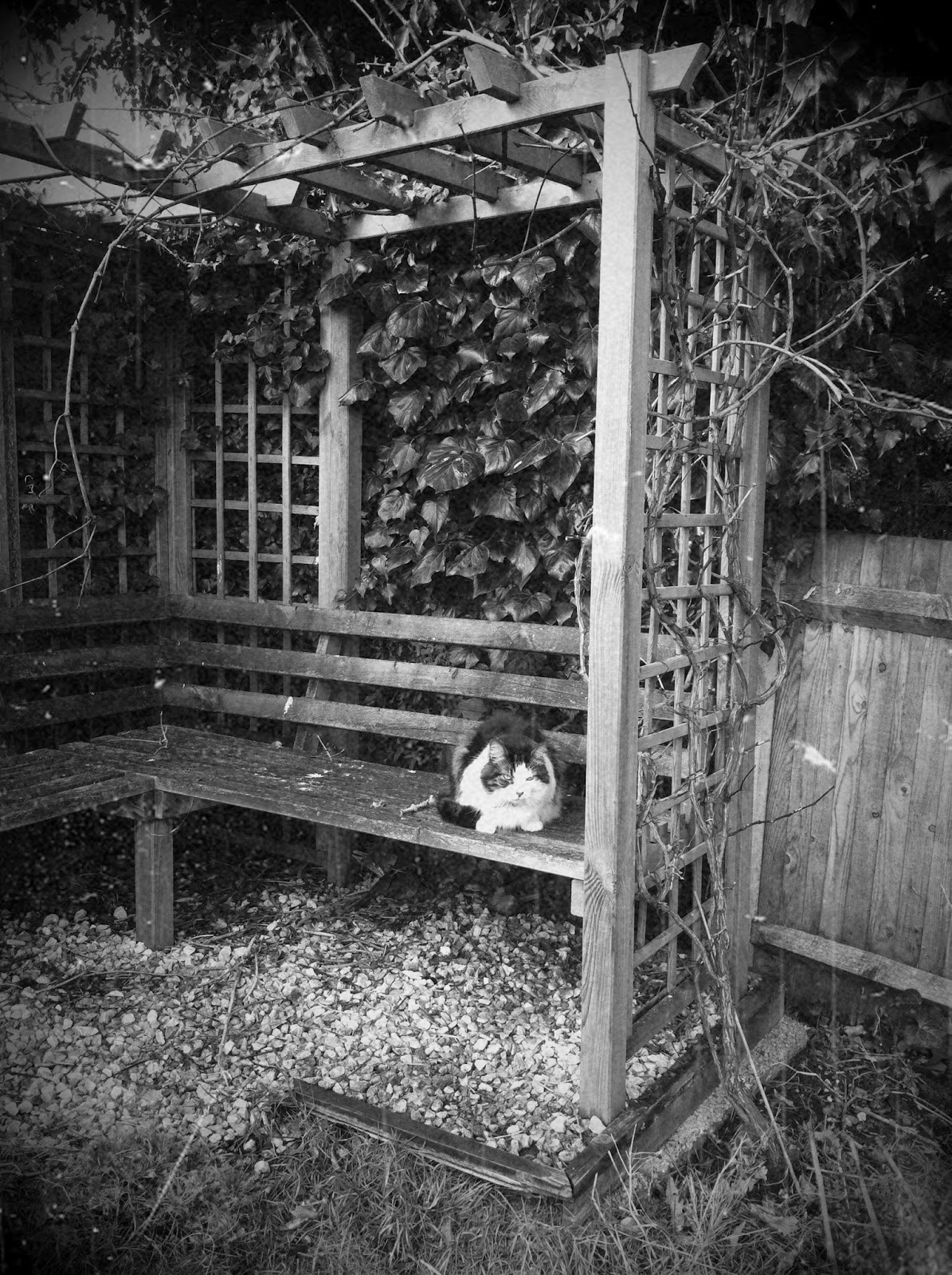
 Even though I went there in the daytime (4pm), it was starting to get darker when I got to the graveyard in Sutton. I couldn't stay there for more than 5 minutes and left (ran) after taking two photographs. Also, the first image, with the cat, is actually taken in my friends back garden. 

My friends back garden
Jan 31st 2015
photo taken by: A. Coric
Cheam Graveyard
Jan 31st 2015
photo taken by: A. Coric

Cheam Graveyard
Jan 31st 2015
photo taken by: A. Coric
Cheam Graveyard
Jan 31st 2015
photo taken by: A. Coric
St Dunstan's ChurchCheam Graveyard
Jan 31st 2015
photo taken by: A. Coric
St Dunstan's ChurchCheam Graveyard
Jan 31st 2015
photo taken by: A. Coric
Cheam Graveyard
Jan 31st 2015
photo taken by: A. Coric
Cheam Graveyard
Jan 31st 2015
photo taken by: A. Coric

St Dunstan's ChurchCheam Graveyard
Jan 31st 2015
photo taken by: A. Coric
Cheam Graveyard
Jan 31st 2015
photo taken by: A. Coric
Cheam Graveyard
Jan 31st 2015
photo taken by: A. Coric
Sutton Graveyard
Jan 31st 2015
photo taken by: A. Coric
Sutton Graveyard
Jan 31st 2015
photo taken by: A. Coric

I think the key gothic motifs in these images are mostly cold, darkness, ghostlines and decay. I'd say that demimonde is also one of them, as there is a thin line between the living and the dead; death being the biggest motif in these images. That whole day was quite gloomy and foggy and even though it is not really showing in the images, it all seemed very mysterious. 

Victorian Makeup

I've briefly researched Victorian make up and skin care in the first post. But now I wanted to get more into the make up and to get a better understanding, as we are creating a historical make up look. 
Clematis - Lovely old Victorian engravings of beautiful women early - mid 1800's.Hubert Von Herkomer
Clematis
Beautiful Victorian woman
 (early-mid 1800s)
engraving
artist: Hubert Von Herkomer
(source: https://www.pinterest.com/pin/80994493274017093/)

For my assessment I would like to create a young Miss Havisham look. I want to do a Victorian bridal makeup look. To be precise, it is the moment when she was getting ready on her wedding day, after she read the letter in which she found out there will not be a wedding after all. In that one moment, her heart dropped. Even though she looked beautiful (in her own Victorian way), that was the moment when she slowly started dying. 


I found hese two interesting books written in the Victorian Era;

"The Mirror of the Graces: or, The English Lady's Costume" is the name of the first woman's beauty book, published in London (1811). The author was anonymous, all we know is that the author called herself  "A Lady of Distinction."

The Arts of Beauty; or, Secrets of a Lady's Toilet, with Hints to Gentlemen on the Art of Fascinating" by Lola Montez was published in New York by Dick & Fitzgerald (1858).

Pale Complexion and Skincare

"... so a young woman with very indifferent features, but a fine complexion, will, from ten persons out of twelve, recieve spontaneous and warm admiration." 
Distinction, L  (1830) The Mirror of the Graces: or, The English Lady's Costume  (page  33),  North Bridge, and Longman and co. London)

  "A fine, clear skin, gives an assurance of the inherent residence of three admirable graces to beauty; Wholesomeness, Neatness and Cheerfulness" 
Distinction, L  (1830) The Mirror of the Graces: or, The English Lady's Costume  (page  34),  North Bridge, and Longman and co. London)

"For her usual ablution, night and morning, nothing is so fine an emolient for any rigidity or disease of the face as a wash of French or white brandy, and rose-water; the spirit making only one-tird of the mixture. The brandy keeps up that gentle action of the skin which is necessary to the healthy appearance of its parts. It also cleanses the surface. The rose-water corrects the drying property of the spirit, leaving the skin in a natural, soft and flexible state. Where white or French brandy cannot be obtained, half of the quanity of spirits of whine will tolerably supply its place."  
( Distinction, L  (1830) The Mirror of the Graces: or, The English Lady's Costume  (page  37),  North Bridge, and Longman and co. London)

"Perhaps the painted creature may be admired by an artist as a well- executed picture; but no man will seriously consider her as a handsome woman. White painting is, therefore, an ineffectual, as well as dangerous practice." 
Distinction, L  (1830) The Mirror of the Graces: or, The English Lady's Costume  (page  40),  North Bridge, and Longman and co. London)

"I will give the recipe for making the Vestris' Paste for the benefit of any of my readers whose looking-glass warns them than the dimness and wrinkles of age are extinguishing the roses of youth: The whites of four eggs bioled in rose-water, half an ounce of alum, half an ounce of oil of sweet almonds; beat the whole together till it assumes the consistence of a paste." 
(Montez, L (1858) The Arts of Beauty; or Secrets of a Lady's Toilet (page 40), Dick & Fitzgerald, New York)

It all about wearing very minimal make up and neutral shades. Women wanted to be pretty, but at the same time they wanted to make it seem like they naturaly looked like that. To have flawless, glowing, pale skin was what they all wanted. That is why they started creating home made mixtures from natural ingredients to get rid of scars and acne (check the first post for details). The white paint used on the face was similar to the foundations we used today, but they used aromatic water, oils Zinc Oxide, acids, vinegar, lemon juice etc. Zinc Oxide replaced highly toxic lead used by the Elizabethans. Women were allowed to use powders and they were mostly made out of rice flour. White talcum powder was used too. They even had alternatives to today's highlighters; Pear's White Imperial Powder was the most popular one, made out of finely ground bismuth. This product was mostly used but older women. 

Soaps became cheaper and by the end of the 19th century middle classes began to have a bathroom. Also, first modern deodorant was invented in 1888, called 'Mum'.


The 'Sickly Look'

Drawing on the veins and under eye circles to look almost sickly is the one thing I will never understand. They'd even use arsenic or lemon juice on their eyes to achieve that 'glow'.

There were a lot of diseases, and if you had to die, that was considered the 'stylish' way to go. Tuberculosis (TB), or consumption, as they called it back then, was highly contagious. It made you loose weight and look really pale, and the fever would make your cheeks red and eyes sparkle. Sounds horrible but in the 19th century, that was the easiest and quickest way to look 'your best' and it was highly romanticized. If you were to have TB, the dying proces would be long. The victim would lie in bed in a beautiful gown, and her/ his loved ones would gather around and cry. That was considered the best way to go. 
The Victorians were not only imitating the tragic parts of life, but also celebrating them. They would take photographs with the deceased to remember them forever! 

Cheeks

"Who has not percieved and admired, the rising blush of modesty enrich the cheek of a lovely girl, and, in the sweet effusion, most gratefully discern the true withness of the purity within? Who has not been sensible to the sudden glow on the face, which announces, ere the lips open, or the eye sparkles, the approach of some beloved object? Nay will not even the sound of his name paint the blooming cheek in deeper roses? 
Distinction, L  (1830) The Mirror of the Graces: or, The English Lady's Costume  (pages 38/39),  North Bridge, and Longman and co. London)

"... there are some red paints which may be used with perfect safety. A little vegetable rouge tinging the cheek of a delicate woman, who, from ill health or an anxious mind, loses her roses, may be excusable; and so transparent is the texture of such rouge, (when unadulterated with lead,) that when the blood does mount the face, it speaks through the covering and enhances  the fading bloom.
... 
Good  sense must so perside over its aplication, that its tint on the cheek may always be fainter that what nature''s pallet would have painted. A violently rouged woman is one of the most disgusting objects to the eye. " 
Distinction, L  (1830) The Mirror of the Graces: or, The English Lady's Costume  (page 41),  North Bridge, and Longman and co. London)

"For brunettes, a slight touch of simple carmine on the cheek, in its dry powder state, is amply suficient. For fairer complexions, letting down the vidid red of the carmine with a mixture of fine hair powder, till it suits the general appearance of the skin, will have the desired effect." 
Distinction, L  (1830) The Mirror of the Graces: or, The English Lady's Costume  (page 43),  North Bridge, and Longman and co. London)

Powder blush, or rouge as they called it, was most common, but creme rouge was also used. The most popular blusher was Pear's Liquid Blooms of Roses. It came in 3 shades; Safflower (a purple tone), Alkanet (rose pink) and of course Carmine (red). Charmine was made out of cochineal, sometimes from muriate of tin, which give be a bright red colour. To mute it, they used talcum powder.
Victorians would even make rouge in sheets, crepons, made out of crepe paper dipped in make up. It was highly pigmentated so they had to be very careful when applying. 


Eye Make Up and Eyebrows

"Penciling eye-brows, staining them, &c., are too clumsy tricks of attempted deception, 
...
Nature, in almost every case, is our best guide. Hence the native colour of our own hair is, in general, better adapted to our own complexions." Distinction, L  (1830) The Mirror of the Graces: or, The English Lady's Costume  (pages 43/44/45),  North Bridge, and Longman and co. London)

Eye make up was mostly frowned upon, probably as it looked most unnatural and it was difficult to apply. Eyeshadows were made out of lead and antimony sulfide. A mixture or lampblack (or burnt cork) and oils  made into a paste was used on the eyelashes and eyebrows. Yes, unlike the Elizabethans, Victorians didn't pluck, but enhanced their eyebrows - without making it noticable of course.


Lipstick and Lip balm

"Old Hafez, the great poet of Persia, sang perpetnally of "Lips that could outblush the ruby's red, With luscious dews of sweetness fed." Even Milton's stern lyre was tuned to sweetest song about "the vermil-tinctured lip." 
(Montez, L (1858) The Arts of Beauty; or Secrets of a Lady's Toilet (page 40), Dick & Fitzgerald, New York)

Lipsticks (lip rouges) was used very sparingly, just to give a little bit of colour to the lips. Rigge's Liquid Bloom was a popular brand, and the product would give a rosy glow. So basically that was the 19th century lipgloss. Vermilion was used for bright red lips, but it would look more like a paint. 

Those who did not want to use any lip products found other methods of enhancing their lips. Biting lips and kissing rosy crepe paper are just some examples.

Upper class women would even go to Paris to buy Guerlain's lip pomade which was a mixture of butter, wax and grapefruit. Guerlain, a French cosmetic company, began manufacturing lipstick by the end of the 19th century. In 1884 perfumers in Paris invented the first commercial lipstick made out of castor oil, deer tallow and beeswax and it was covered in silk paper.

Since Queen Victoria was strongly agains make up, there were even underground lip rouge societies. There, women would secretly trade recipes and make lip rouges. 

As I mentioned, DIY cosmetics were popular. Lip balms were usually made out of several ingredients found in every victorian kitchen. The most popular lady's magazine of that time, Godey's Lady's Book, published a recipe for tinted lip balm in the issue from March 1857. The ingredients were: sweet almond oil (2 tbs), beef tallow (3/4 tbs) and grated beeswax (3/4-1 tbs) and peppermint essential oil - optional (12-15 drops).


http://ourheritageofhealth.com/victorian-homemade-tinted-lip-balm/
http://books.google.co.uk/books?id=cgIFAAAAYAAJ&printsec=frontcover&source=gbs_ge_summary_r&cad=0#v=onepage&q&f=false
http://www.rookiemag.com/2014/03/a-fashionable-death/
http://www.vintageconnection.net/ModesInMakeup.htm
http://www.localhistories.org/cosmetics.html
http://humantouchofchemistry.com/know-how-lipsticks-came-into-being.htm
https://yesterface.wordpress.com/2011/06/04/the-history-of-lipstick/
http://hibiscus-sinensis.com/regency/cosmetics.htm
http://beautifulwithbrains.com/2010/08/06/beauty-in-the-victorian-age/
http://www.katetattersall.com/?p=3735http://stylecaster.com/timeline-sexy-defined-through-ages/

all reference found on Feb 1st/2nd/4/6th 2015

nedjelja, 1. veljače 2015.

Gothic Revival In England

This style flourished from 1810 to 1900 and it is one of the most influential styles of the 19th century. The designs were based on the forms and patterns from the Middle Ages and it was combined with the romantic version of Medieval chivalry. 

Here is just something I found about the Gothic Revival in England in the book called The Catedrals of Britain by L. D. Edwards...

Gradually, however, an interest in 'Gothic' architecture arose along with the assumption that the Middle Ages could do with imrpvement. A manual for architects was "Gothic Architecture Improved by Rules and Proportions" by Batty Langley (1742). Although the chief architects who were reckoned to know about old churches, James Essex and James Wyatt, did not know much they were able to impose their schemes on even more ignorant clergymen. Often the resaults were lamentable, as were some attempts to fill medieval windows with pictures which would have been better on canvas.  The nave of the Norwich Cathedral is almost spoiled by the huge west window of 1854.

- Edwards D. L.  (1989) The Catedrals of Britain  (pages 63/64)  Pitkin Unichrome, Andover Hampshire 


Norwitch Cathedral, west window
Artist: George Caleb Hedgeland
19th century
(source: http://en.wikipedia.org/wiki/George_Hedgeland)

Almost 100 years were to pass before the Commissioners made a more satisfactory deal with the cathedrals, retaining their estates but supporting a dean and two canons and contributing to the general expenses. That was the setting in which the Victorian renewal of the cathedrals was slowly accomplished. 
.....
Gothic revival in Britain is well worth telling. Much of the early work which attempted to contionue or revive medieval traditions was of poor quality; the little chapel of 1813 which became the core of the Roman Catholic cathedral in Edinburgh was one example. 

- Edwards D. L.  (1989) The Catedrals of Britain  (pages 64)  Pitkin Unichrome, Andover Hampshire

St Mary's (Roman Catholic) Cathedral, Edinburgh
1813
(source: http://www.dailyrecord.co.uk/news/scottish-news/thieves-steal-significant-painting-altar-1874469)


http://www.visual-arts-cork.com/history-of-art/nineteenth-century-architecture.htm
reference found on Feb 1st 2015

Early Gothic Architecture In England

Gothic buildings built from the 12th to the 16th century were the biggest source of inspiration to designers in the 19th century. The style first started in France and was quickly taken up by England. Pointed arches, steep - sloping roofs, ribbed vaulting and decorative ornaments and plant decorations (rose windows) that were added to give the tree-like look of the interiors are the characteristics of the Gothic buildings. This style was used when building the Canterbury and Winchester Cathedrals and Westminster Abbey - where the royal corotanions took place. 


The Westminster Abbey

This is the highest Gothic building in England, nearly 102 feet tall. It dates from the reign of King Henry III. He laid the foundation stone for a new Lady Chapel in 1220. Because of the Abbey's finantial resources were not sufficient, the rebuilding of the whole church could not be continued. In 1245 Henry pulled down the eastern part of the 11th century Abbey - which had been founded by King Edward. Later, Henry wanted to build a more magnificent church in the New Gothic style, in devotion to St Edward. Masons Henry of Reyns, John of Gloucester and Robert of Beverly supervised the work. Henry of Reyns was highly influenced by chatedrals in Reims and Amiens. It was designed on the sistem of geometrical proportion. Gothic features used when building the Westmister Abbey were: pointed arches, ribbed vaulting, flying buttresses and rose windows. English features were: single aisles (rather than double), a long nave with wide projecting transepts and elaborate mouldings of the main arches. 

By 1272, when Henry III died, only one bay of the nave beyond the choir screen had been completed. The old Norman nave remained attached to the Gothic building for over a century - until the 14th century when more money was avalible. Nicholas Litlyngton used Cardinal Simon Langham's money for the western section, and for the next 150 years the work slowly progressed. Litlyngton insisted that Henry III's masons design should be followed. Mason Henry Yevele made a few minor changes in the architectural design that can be seen (on the rosette and diaper).

Henry V was buried at the eastern end of the St Edward's Chapel in 1422. In accordance with his will a lavishly sculptured chantry chapel was built over the tomb with two staircases leading to an altar above. 

Between 1503 and 1519, Henry VII added a new Lady Chapel, to replace the one from the 13th century. The Perpendicular architecture of the chapel was in total contrast with tre rest of the Abbey. It has been called "One of the most perfect buildings ever erected in England" and "The wonder of the world" and Henry spent a fortune on its decoration. All around the chapel are Tudor emblems and there are nearly hundred statues  of saints around the walls.
By 1530 everything but the top parts of the west towers remained unfinished. 

In 1745 the last phase of building was completed - the West Towers in Portland stone. The designer was Nicholas Hawksmoor. 

File:Westminster Abbey by Canaletto, 1749.jpg
Westminster Abbey with a procession of Knights of the Bath, London
 Landscape 
Oil on canvas
Painting by: Giovanni Canaletto, 1749.
(source: http://commons.wikimedia.org/wiki/File:Westminster_Abbey_by_Canaletto,_1749.jpg)

Princess Victoria became Queen on June 20th 1837, when her uncle, Kinf William IV died. The coronation was held at Westminster Abbey on June "8th 1838. It was a huge occasion and 400 000 people went to london to see her being crowned. 


http://www.westminster-abbey.org/our-history/architecture
http://www.vam.ac.uk/content/articles/s/style-guide-gothic-revival/
http://www.vam.ac.uk/content/articles/g/gothic-architecture/
http://www.royal.gov.uk/The%20Royal%20Collection%20and%20other%20collections/TheRoyalArchives/QueenVictoriaeducationproject/QueenVictoriasCoronation1838.aspx

reference found on Jan 30th 2015